Friday, December 28, 2018

Dosage compensation:


In XX: XY sex dtermination, the amount of gene product encoded by the X-chromosome would be high in females (twice than produced in males). DC equalizes the amount of protein produced by X-linked genes in two sexes. In flies, DC is achieved by doubling the activity of the genes on X-chromosome of the male. In worm, C.elegans, it is achieved by halving of the activity of genes on both of the X-chromosome in females. In females that are heterozygotes at X-linked locus, 50% of the cells will express one allele and 50% will express the other allele. Thus protein produced by both alleles will be produced but not within the same cell.

In humans, females are hemizygous at the cellular levels for X-linked genes. Mary lyon gave Lyon hypothesis which states that within each female cells, one of the two X-chromosomes becom inactive and it is random. Random inactivation requires two steps: (a) the cell assess or count how many chromosomes are present, (b) one X-chromosome is selected to become the active X-chromosome and all others are silenced. Gene called Xist (X-inactivation specific transcipts) is active on the X-chromosome destined to become inactive, producing an RNA molecule that is quite large and lacks ORF, thus cannot be translated. This RNA product spread and coats the X-chromosome bearing the gene that produced them and inactivates the genes on it, probably by altering chromatin structure. This inactivation is of cis-acting. X-inactivation center (Xic) is the region located on the proximal end of the p-arm in humans (end toward centromere), its genetic expression occurs only in the inactivated X-chromosme. Other non-coding gene Tsix and Xite also play important role. On the X-chromosome destined to be active, other genes repress the activity of Xist so that Xist RNA on this chromosome remains active.

The inactivated X-chromosome is called barr body which was identified by Murray Barr. It is darkly stained bodies in the nuclei of cells of females.

karyotype
phenotype
Barr bodies
XX
Normal
1
XY
Normal
0
XO
Turner
0
XXY
klinefeltor
1
XXYY
klinefeltor
1
XXXY
klinefeltor
2
XXXXY
klinefeltor
3
XXX
Triplo-X
2
XXXX
Poly-X female
3
XXXXX
Poly-X female
4

plant hormones


Plant hormones:

Auxin: indole-3-acetic acid (IAA) derived from indole , stimulate cell elongation.

Gibberellins: derivative of gibberellane, induce elongating growth of internodes.

Zeatin: a cytokinin is a prenylated adenine and stimulates cell-division.

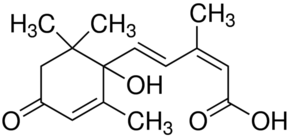
Abscisic acid: formed from carotenoids, regulate water balance, induce seed dormancy.

 Ethylene and jasmonic acid: derivative of fatty acids, enhance senescence.

Brassinosteroids: functions in regulation of cell development.

Peptide hormones: regulate plant development. And in addition to jasmonic acid and salicylic acid play a key role in pathogen defense.

(A) Auxin stimulate shoot elongation growth:

Charles Darwin and Francis noted growing plant seedlings bend towards sunlight. Frits Went isolated from tip of oat seedlings, a growth stimulating substance auxin, later IAA. Other substances with auxin properties are phenylacetic acid. Synthetic auxin: 2,4- dichlorophenoxyacetic acid (2,4- D, Rohm and Haas) is used as herbicide. It results in disordered morphogenesis and increased synthesis of ethylene, thus leading to premature senescence of leaves. 2,4-D is a selective herbicide that destroys dicot plants. Monocots are insensitive to it because they eliminates the herbicide by degradation. For this reason, 2,4-D is used for combating weeds in cereal crops. As agent orange, it was used in Vietnam war to defoliate forests.

During early embryogenesis, auxin governs the formation of main axis of polarity, with shoot meristem at the top and root at opposite pole. Auxin generally influence cell division and cell differentiation. IAA promotes elongating growth of cells. Highest IAA conc. are found in main growth zone of shoot, primarily at tip of shoots, from there it is transported to cells by an energy-dependent polar transport by efflux or influx carriers of plasma membrane. Auxin is known to induce or repress specific set of genes. IAA stimulates cell division in cambium, enhance apical dominance by suppression of lateral bud growth and control embryo development. IAA prevents the formation of abscission layer for leaves and fruits and is antagonist to ethylene. On the other hand, high IAA conc. can induce the synthesis of ethylene. Auxin induces the formation of fruits. Seeds produce IAA only after fertilization. IAA prevent formation of seeds resulting in seedless eggplant but being four times larger. IAA is synthesized from tryptophan by three different pathways:


(B) gibberellin regulate stem elongation:

Infection of rice by fungus results in formation of extremely tall plants that fall over and bear no seed. This disease was called foolish seedling. Eiichi Kurozawa isolated a substance from this fungus that induces unnatural growth and called it gibberellin. Derived from hydrocarbon ent- gibberellane, they are intermediate or by-product of biosynthetic pathway. The most important gibberellin is GA1- synthesized from isoprenoid geranylgeranyl pyrophosphate. Gibberellin stimulate shoot elonagtion, it induces rosette plants (spinach or lettuce) to shoot up for formation of flowers and also regulate flowering. It terminates seed dormancy, by softening of seed coat and facilitate seed germination by expression of genes for enzymes (amylase). Its synthesis is controlled by light via phytochrome. It is important for production of seedless grapes, it causes extension of cell and also parthenocarpy, malting of barley for beer brewing, it is added to induce formation of amylase. Inhibitors of GA are retardants e.g., cycocel, BASF- decrease the growth of stalks. It influence gene expression and reduces the action of repressor protein, DELLA proteins, which supress growth. Green revolution: increase the yield of cereal crops dwarf wheat lines, reduced stalk growth. Due to mutation in gene encoding transcription factor of GA signal transduction chain.

(C) cytokinin (CK) stimulate cell-division:

Zeatin is the most common cytokinin. It is the derivative of adenine. N-group is linked with hydroxylated isoprene in trans-position.

 
zeatin

 CK increases sprouting of lateral buds. CK override apical dominance. They are antagonist of auxin IAA. CK retards senescence and thus counteract ethylene. Larvae of butterfly (Stigmella) excrete CK to prevent senescence of that leave on which they are feeding. Some bacteria produce auxin and CK to induce unrestricted cell-division, which results in tumor formation in plants. E.g., crown gall induced by Agrobacterium tumefacien.

Zeatin is formed from AMP and dimethyallyl-pyrophosphate. The isoprene unit is transferred by CK synthase to the N-group of AMP and is then hydroxylated. CK synthesis takes place in meristematic tissues. CK receptors are dimeric histidine kinases. Upon binding of CK, the two histidine kinases phosphoryl their histidine residues reciprocally by auto-phosphorylation.

(D) Abscisic acid control water balance:

It causes abscission of leaves and fruits. An important function is induction of dormancy of seeds and buds. AA induces with nitric oxide (NO) the closure of stomata. It prevents vivipary (seed embryo from germinating before seeds mature). Mutants have witling of leaves and fruits like in tomatoes. AA is product of isoprenoid metabolism. Synthesis of AA proceeds via oxidation of violaxanthin. AA synthesis occurs in leaves and roots and transported by xylem vessels from roots to leaves. It causes alteration in metabolism by influencing gene expression. It involves G-proteins, protein kinases, phosphatase and messenger substances like cyclic ADP-ribose (cADPR). This cause discharge of Ca2+ ions and inactivation of ion channels in stomata.


(E) Ethylene makes fruit ripen:

It is involved in induction of senescence by (I) degradation of leaf material is initiated (II) proteins are degraded to amino acids (III) ions are withdrawn from senescense leaves. Ethylene induces defense reaction after infection by fungi or wounded plants. It stimulates abscission of fruit, ethylene functions in fruit ripening: breakdown of chlorophyll and synthesis of other pigments e.g., apple – green to red, fruit softening due to breakdown of cell walls by cellulase and pectinase. S-adenosylmethionine is precursor for ethylene. ACC (aminocyclopropane carboxylate) synthase and ACC oxidase catalyze the reaction.

(F) Steroid and peptide hormones:

Brassinosteroids like brassinolide synthesized from campesterol.it regulate plant development, stimulate shoot growth, folding of leaves and differentiation of xylem. Retard root growth and  formation of anthocyan. First isolated from pollen. Developmental defects in mutants are dwarf growth, reduced apical dominance and lowered fertility.


(G) Systemin induces defense against herbivores:

It is of 18 amino acids, binds to receptor like kinase (RLK). It generated jasmonic acid, a signal in the transcription activation of defense-related genes. Accumulation of proteinase inhibitors, respond to insect attack because they impair their digestion.

(H) phytosulfokines regulate cell proliferation:

Mixture of two small polypeptides named phytosulfokines (PSKI and II) containing two tyr residue which both –OH are esterified with phosphate. They have an important effect on dedifferentiation of cells.

(I) PHYTOALEXINS:

H2O2 is involved in lignification process and thus play role in solidification of cell wall as defense against pathogens. Formation of NO, a radical. It is messenger formed by oxidation of arginine, catalyzed by NO synthase. NO is important messenger in hormonal and defense responses : high NO- high Ca2+ - signal cascade. It induce opening of stomata, initiation of programmed cell death and formation of phytoalexins and synthesis of salicylic acid. SA induces beta-1,3- glucanase which digest cell wall of fungi and lipoxygenase- which synthesis jasmonic acid.

JA and its methylester as well as its precursor, 12-oxo-phtodienoic acid (OPDA) play role in defense reaction. As response to fungal infection, JA induces the synthesis of phenylammonium lyase (PAL), chalcone synthase (CHS)- flavonoid synthesis. JA induces plants to produce proteinase inhibitors. As a response to mechanical stress, JA induces increased growth in thickness of stem or tendrils to give plants higher stability. JA regulate the development of pollen. Mutant plants which are unable to synthesis JA cannot produce functioning pollen and hence, sterile male. JA like auxin and GB  uses the ubiquitin pathway to control gene expression through protein degradation. JA functions as systemic wound signal (an attack by herbicides- initiates defense response not only in wounded leaves but also in more distant parts –systemic response).

Sunday, December 23, 2018

Flow of electrons in Z scheme


·         The Z-scheme describes the complete route by which electron flow from  H2O to NADP+, according to the equation:  2H2O + 2NADP+  + 8 photons               O2 + 2 NADPH + 2 H+

·         For every two photons absorbed (one by each photosystem) one electron is transferred from H2O to NADP+, a total eight photons must be absorbed, 4 by each PS.

·         Excitation of P680 in PSII produces P680*, an excellent electron donor that transfers an e to pheophytin, giving it (-ve) charge.

·         With the loss of its e ,P680* is transformed into a radical cation P680+, pheo- very rapidly passes  its extra electron to a protein bound plastoquinone, PQA which in turn passes its e to another more loosely bound plastoquinone PQB.

·         When PQB has acquired 2 e in two such transfer from PQA  and two photons from solvent water, it is in its fully reduced quinole form PQBH2. The overall reaction in PSII is:

·         4 P680 + 4 H+ + 2 PQB + 4 photons                      4 P680* + 2 PQBH2

·         Eventually the e in PQBH2  passes through the cytochrome b6f complex. The e initially removed from P680 are replaced with an e from oxiadtion of water.

·         The excited reaction center P700* loses e to an acceptor A0 again excitation results in charge separation at the photochemical reaction center. P700+ is a strong oxidizing agent, which quickly acquires an e from plastocyanin, a soluble Cu-containing e transfer protein.

·         A0- is a strong reducing agent that passes its e through a chain that leads to NADP+.

·         First phylloquinone (A1) accepts an e and passes it to an Fe-S protein three Fe-S center in PSI.

·         From here, e moves to ferredoxin (fd).

·         The fourth e carrier in chain is the flavoprotein ferredoxin : NADP+oxidoreductase which transfer e from reduced ferredoxin to NADP+.

·         2 Fd(red) + 2 H+ + NADP+                 2 Fd (ox) + NADPH + H+


Different phases of CAM pathway


·         Crussulacean acid metabolism (CAM) enables many plant to grow in extremely dry environments such as deserts. This pathway is commonly found in Cactaceae, Euphorbiacae and Aizoaceae.

·         CAM photosynthesis involves a temporal separation of the functioning of two carboxylating enzymes. PEP carboxylase and Rubisco. CAM open their stomata at night when temperature are usually below the day time, so there is reduced risk of dehydration.

·         There are four phases in CAM pathway. The sequence are as follows:

·         PHASE I : (night) Co2 entering the leaf at night is first assimilated (as bicarbonate) by PEP carboxylase, forming OAA from HCO3- and PEP as it does in C4 plant.

·         The regulation of PEP carboxylase is different as it active now in the dark and inactive in light.

·         The OAA formed in this reaction is reduced to malate, which is moved into the vacuole by a translocator mechanism and stored their overnight. This accumulation of malate in the form of malic acid in the vacuole, can reach high conc. so that the leaf as a whole become distinctly acidic.

·         PHASE II: While the end of phase I, is the marked closure of stomata, they may reopen briefly at the very beginning of the light period providing the plant is not experience drought condition. This defined as Phase II, where external CO2 can be assimilated by both PEP carboxylase and Rubisco.

·         The signal for the stomata to open under these conditions results from combined effect of light together with low internal conc. of CO2.

·         Malate decarboxylation releases CO2 and as this build ups internally the stomata close and plant enter Phase III.

·         PHASE III: (light) In the morning, stomata close, the calvin cycle enzymes are active and Rubisco is available for CO2 assimilation.

·         Malate moves out of vacuole and into cytosol where it is decarboxylated by malic enzyme. This reaction releases CO2 and because stomata closed it cannot escape.

·         Rubisco is operating in CO2- enriched environment and photorespiration is kept to a minimum. Rubisco produces 3-PGA and the Calvin cycle function exactly same as C3 and C4 plants.

·         Phase IV: As the pool of malate become depleted in vacuole and CO2 conc. begin to fall again, the stomata may reopens once more in the light period. This marks onset of phase IV where again, both PEP carboxylase and Rubisco able to fix CO2 from the surrounding air.

Saturday, December 22, 2018

Indeterminate vs. Determinate nodules


Determiante nodule
Indeterminate nodules
1. Individual symbiosomes may fuse and/or bacteroids divide within the symbiosome leading to the formation of these nodules.
1. Symbiosomes further divide together within the bacteroid leading to a symbiosome containing a single- Bacteroide and hence form the indeterminate nodule.
2. They have a meristem at the periphery and this is only active at early stages of development.
2. They have persistent meristem at the apex.
3. They are spherical in shape.
3. They are generally cylindrical in shape.
4. In determinate nodules mature tissues completely surround the nodule and the vascular bundle.
4. They have meristem at the apex and this meristem add cells in proximal direction to the different nodules tissues, due to which mature tissue are absent at the nodule apex.
5. Determinate nodules are found on certain tribes of tropical legumes such as soybean, common bean and some temperate legumes such as lotus.
5. They are found in papilionid legumes such as pea, alfalfa and all mimosoid legumes.
6. infection thread origin is narrow, subtropical and tropical region.
6. infection thread origin is broad, temperate region.

Organogenesis vs. Somatic embryogenesis


ORGANOGENESIS
SOMATIC EMBRYOGENESIS
1. Organogenesis is the process of morphogenesis involving the formation of plant organ i.e., shoot, root, flowers, buds from explants or cultured plant tissues.
1. The process of regeneration of embryos from somatic cells, tissues, or organs is regarded as somatic (or asexual) embryogenesis.
2. During organogenesis, shoots or roots develop from a group of cells resulting into Chimera formation which later established a strong connection with the maternal tissues.
2. The embryo arises from a single cell and has no vascular connection with maternal callus tissue or cultured explants.
3. In the induction of organogenesis, it requires two different hormonal signals to induce shoot first and then root organ.
3. Induction of somatic embryogenesis requires a single hormonal signal to induce a bipolar structure capable of forming a complete plant.
4. Organogenesis is a monopolar structure.
4. Embryogenesis is a bipolar structure.

Differentiate between PS I and PS II


PSI
PSII
1.PSI is located at the outer surface of the grana thylakoid membrane. (non-appressed region ans stroma lamella)
1. PSII is located at the inner surface of the grana thylakoid membrane. (appressed granal region)
2. The photocenter or reaction center in PSI is P700.
2. The photocenter in PSII is P680.
3. PSI has an iron-sulfur (Fe-S) type reaction center (or type-I).
3. PSII has a quinone type reaction center (also known as Q-type).
4. The core complex of PSI is composed by a smaller number of proteins (15 subunits)
4. The core complex of PSII is a multi-complex composed of about 25-30 subunits.
5. Pigments absorb longer wavelength of light (>680nm)
5. Pigments absorb shorter wavelength of light (<680 nm)
6. Participate cyclic and non-cyclic phosphorylation.
6. Participate only cyclic phosphorylation.
7. PSI takes electrons from plastocyanin and reduces ferredoxin.
7. PSII  splits water to form proton and O2 and reduces plastoquinone.

PHASE CONTRAST MICROSCOPY

Introduction: Most cells are too small to be seen by the naked eyes, the study of cells has depended heavily on the use of microscopes. Mi...